
Cryptocurrency trading has exploded in popularity, and with it, swapping one crypto for another has become a daily routine for many. But hold on—did you know that not all costs involved in crypto swaps are obvious? Yep, hidden fees can sneak up on you and eat away at your profits if you’re not careful. Let’s break down what these hidden fees are, why they happen, and how you can spot them before they take a bite out of your wallet.
What Are Crypto Swaps?
Crypto swaps are a method of exchanging one cryptocurrency for another directly, without converting it into fiat currency like USD, EUR, or INR. This means that if you hold Bitcoin and want Ethereum, you don’t need to sell your Bitcoin for dollars and then use those dollars to buy Ethereum. Instead, you can simply swap BTC for ETH in a single transaction. This process is especially useful for traders who want to move between different assets quickly, without dealing with traditional banks, currency conversions, or extra steps that slow things down.
At the heart of crypto swaps is the concept of liquidity—how easily one asset can be exchanged for another. Platforms that offer swaps usually tap into liquidity pools or order books that contain large amounts of various cryptocurrencies. When you initiate a swap, the platform either matches your trade with another user (as in order books on centralized exchanges) or pulls from a pool of tokens (as in decentralized exchanges). This helps ensure that swaps happen quickly and efficiently, but it also means that the availability and pricing of swaps can vary depending on the platform, asset pair, and market conditions.
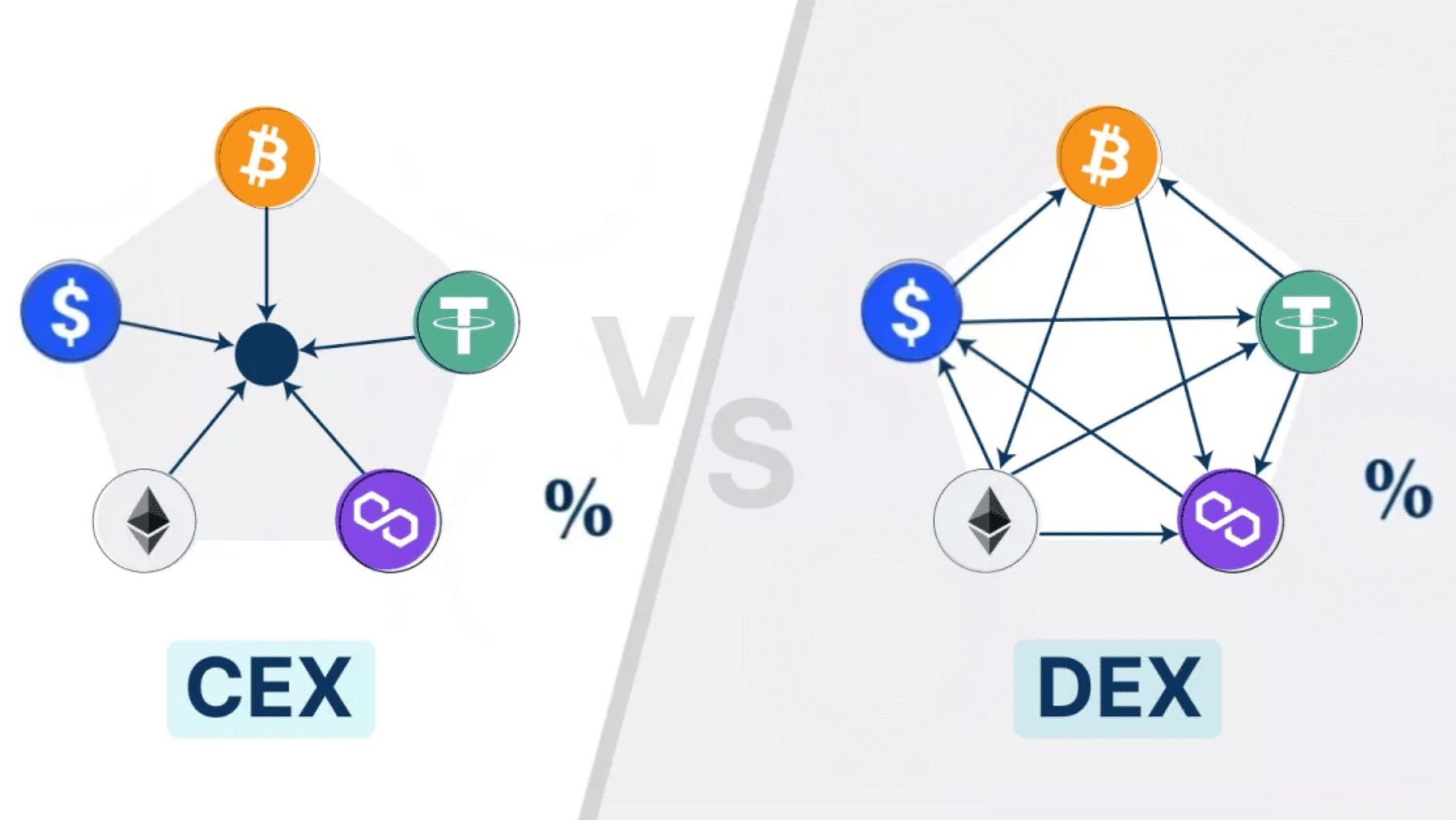
Crypto swaps take place on both centralized exchanges (CEXs) like Binance, Coinbase, and Kraken, as well as decentralized exchanges (DEXs) like Uniswap, PancakeSwap, and SushiSwap. Centralized platforms usually handle the technical details for you and often have faster transaction speeds since they operate off-chain before settling transactions. On the other hand, DEXs run entirely on blockchain networks, giving users more control over their assets and offering greater transparency, but they can be slower or more expensive due to network fees and congestion.
Swapping has become a common practice in DeFi (Decentralized Finance), where users actively manage diverse portfolios of tokens. Whether you’re looking to diversify your holdings, respond quickly to market changes, or take advantage of arbitrage opportunities, swaps offer a streamlined, user-friendly way to do it. However, while the process may seem simple, each swap can involve underlying costs and risks—especially if you’re unaware of the hidden fees that often come with the territory.
Why Are Fees Hidden in Crypto Swaps?
| Reason | Description | Where It Happens | Impact on User | Can You Avoid It? |
| Competitive Fee Marketing | Platforms promote “low-fee” swaps by hiding some fees in the final price | Centralized and decentralized exchanges | Users believe they’re getting cheaper swaps than they actually are | Partially — by reading the fine print |
| Network Congestion and Gas Spikes | Gas fees fluctuate due to blockchain activity, often after the swap is submitted | Primarily on decentralized exchanges (like Ethereum) | Final fee can be much higher than expected | Yes — by checking gas before confirming |
| Slippage from Price Movement | Price changes between order submission and execution cause users to lose value | Especially on volatile tokens or low-liquidity pools | You get fewer tokens than originally quoted | Yes — adjust slippage tolerance settings |
| Hidden Spreads by Liquidity Providers | The difference between bid and ask prices adds a fee without showing it clearly | DEX liquidity pools and CEX market makers | Users don’t realize they’re paying more than market rate | Compare rates across platforms |
| Bundled or Embedded Fee Quotes | Some platforms show one flat price with all fees included but no breakdown | Both CEXs and DEXs | Lack of transparency, harder to understand cost components | Choose platforms with detailed fee info |
Types of Fees in Crypto Swaps
Let’s break down the common fees you might face when performing crypto swaps. Some are visible, others are hidden in the mechanics of the trade. Here’s a detailed list of the types of fees that can affect your bottom line:
- Trading fees are charged by the platform to facilitate your swap. These are usually presented as a small percentage of your transaction amount and are commonly visible before you confirm the trade. On centralized exchanges (CEXs), trading fees typically range from 0.1% to 0.5%, depending on your account level and trading volume. On decentralized exchanges (DEXs), the trading fee often goes to liquidity providers or the protocol itself, such as Uniswap’s standard 0.3% fee on most token pairs.
- Network or gas fees are required to process transactions on the blockchain. Every time you initiate a swap, the network must confirm the transaction, and that comes at a cost. On networks like Ethereum, these fees can fluctuate wildly due to network congestion. At peak times, swapping even small amounts can cost you $20–$50 or more. What’s more, some token swaps involve multiple contract calls or token approvals, each of which incurs additional gas fees—many of which users don’t anticipate beforehand.
- Slippage refers to the price difference between when you initiate a trade and when it actually executes. If the market is volatile or the liquidity pool is shallow, the final price you get might be worse than the one you expected. This often results in receiving fewer tokens than quoted. High slippage tolerance settings can magnify the problem, allowing a trade to go through even if the price has moved significantly. Many traders, especially newcomers, overlook this, and it can quietly drain value from your portfolio over time.
- Spread is the difference between the buy and sell prices of a token, and it’s often embedded in the price shown during the swap. This fee isn’t labeled or broken out, but it still costs you. If you’re swapping lesser-known or low-volume tokens, spreads can be particularly wide, resulting in you paying significantly more for a token than its current market value. Even with popular tokens, small spreads can add up across multiple trades.
- Withdrawal and deposit fees may apply when you’re moving assets into or out of an exchange or wallet. While not part of the swap process itself, these fees still factor into the overall cost of managing your crypto. Centralized exchanges may charge a flat fee for withdrawing certain tokens, regardless of the amount. Additionally, when transferring tokens between wallets, you must pay network fees for each transaction. These costs are often underestimated, especially if you’re frequently moving assets across platforms or blockchains.
How to Spot Hidden Fees?
Spotting hidden fees in crypto swaps isn’t always easy, especially when platforms intentionally simplify interfaces to make trades look seamless. But beneath the clean design and quick confirmations, there can be several layers of cost that aren’t clearly stated. One of the first things you should do before executing a swap is to search for a detailed fee breakdown. Many exchanges, particularly centralized ones, offer a pre-trade summary that includes trading fees, network charges, and estimated slippage. If this summary isn’t shown by default, dig into the advanced settings or help sections—transparency should be non-negotiable when you’re dealing with real money.
Gas fees are another cost component that often flies under the radar, particularly on decentralized exchanges. These fees can spike dramatically depending on blockchain activity, and if you’re not checking before you click, you might end up paying more in gas than in trading fees. To avoid this, use real-time gas tracking tools like ETH Gas Station, or check the blockchain’s native explorer for fee forecasts. On Ethereum, gas can fluctuate wildly within minutes, so swapping during off-peak hours can save you a lot. Being aware of these charges in advance can help you choose whether to proceed immediately or wait for a better window.
Slippage is another sneaky area where hidden costs creep in. Most decentralized platforms allow users to set a slippage tolerance—basically how much price fluctuation you’re willing to accept between the time you initiate the trade and when it’s confirmed. If you set the tolerance too high, you’re leaving the door open for the platform to execute the trade at a much worse rate than expected. On the other hand, setting it too low may cause the swap to fail altogether. It’s a balancing act that requires a bit of experimentation, but understanding how it works puts you back in control of your trading outcomes.
Lastly, it’s always a smart move to compare the swap prices across different platforms or use swap aggregators. Aggregators like 1inch, Matcha, or Paraswap automatically compare liquidity pools and prices across multiple decentralized exchanges to find the most cost-efficient route for your trade. These platforms often include pricing from various DEXs and factor in gas costs and slippage, offering a clearer picture of what you’re actually getting. Hidden spreads can also be spotted this way—sometimes the price difference isn’t about fees, but about where and how the trade is executed. Using comparison tools can uncover discrepancies and help you avoid paying more than necessary.
Centralized Exchanges vs. Decentralized Exchanges: Fee Differences
| Feature | Centralized Exchange (CEX) | Decentralized Exchange (DEX) | Impact on Fees | User Considerations |
| Fee Transparency | Generally clearer, with visible trading fees listed before confirmation | Often opaque; slippage, spreads, and gas costs may not be shown until execution | Easier to calculate total cost on CEX; DEX users must do extra checking | CEX is better for beginners; DEX requires more research to understand full cost |
| Trading Fee | Usually a fixed percentage between 0.1% – 0.5%, often based on user tier | Includes liquidity provider fees, protocol fees (typically 0.2% – 0.3% or more) | Trading fees can be predictable on CEX, variable on DEX depending on token pairs | CEX offers consistency; DEX may offer lower costs for small trades or niche tokens |
| Gas Fees | Typically absorbed by the platform or built into the price | Paid directly by the user in real-time, varies with network congestion | DEX users face volatile gas costs, especially on Ethereum | Use DEXs during off-peak hours or on low-cost networks like Arbitrum or BNB Chain |
| Withdrawal Fees | Flat or variable fee depending on token, paid when moving funds out | No withdrawal fees, but network gas fees apply when transferring wallets | CEX withdrawal fees can be higher for some tokens | DEX users only pay blockchain fees; CEX may charge additional platform fees |
| Speed of Transaction | Faster execution due to off-chain order matching and internal processing | Slower and subject to network conditions since transactions are on-chain | DEX swaps can be delayed by block time or congestion | CEX is ideal for quick trades; DEX users need patience, especially during busy periods |
| Custody of Funds | Exchange holds your funds unless you withdraw them | You retain custody of assets until the transaction is confirmed on-chain | Centralized risk of hacks or mismanagement | DEXs offer more personal control but require knowledge of wallet management |
Why Slippage Is the Most Overlooked Hidden Fee
Slippage is one of the most misunderstood and underestimated costs when making crypto swaps. At its core, slippage refers to the difference between the expected price of a trade and the actual price at which the trade is executed. While this might seem minor at first glance, slippage can significantly impact the total value of your transaction—especially during periods of high market activity or when trading large amounts.
- Low Liquidity in Trading Pools: When there aren’t enough tokens in the pool to handle your trade size efficiently, the protocol must draw liquidity at multiple price levels. This causes slippage as your trade “eats” through the price levels.
- High Market Volatility: When prices are changing rapidly, the price at the moment of initiating the swap may no longer be available by the time the transaction is processed on-chain. This leads to execution at a worse rate.
- Large Trade Sizes: Executing large trades on low-liquidity pools can drastically impact the price, causing more slippage than expected. Bigger trades often move the market, especially in decentralized environments.
- Delayed Network Confirmations: In blockchains like Ethereum, high network congestion means longer confirmation times. By the time your transaction is confirmed, the price may have moved considerably.
- Inaccurate Front-End Estimates: Some DEX interfaces show estimated swap amounts based on outdated or cached data. This leads to a disconnect between what the user sees and what is actually executed.
- Use of Low-Quality Aggregators: Not all aggregators split orders effectively across pools. Some may prioritize speed or fee minimization, ignoring slippage in the process.
- Lack of Slippage Control: If users don’t set slippage tolerance manually, they often use default settings. This can either cause failed transactions (if too low) or excessive loss (if too high).
- Hidden Arbitrage Activity: Bots often take advantage of price gaps between pools, and your transaction could be caught mid-swing if a bot executes a trade milliseconds before yours.
- Gas Fee Timing Conflicts: If a trade is delayed due to underpriced gas fees, the price may fluctuate while waiting in the mempool, increasing slippage.
- Poor Pool Design or Tokenomics: Pools with uneven token pair distributions or limited incentives for liquidity providers often have unstable pricing that contributes to slippage.