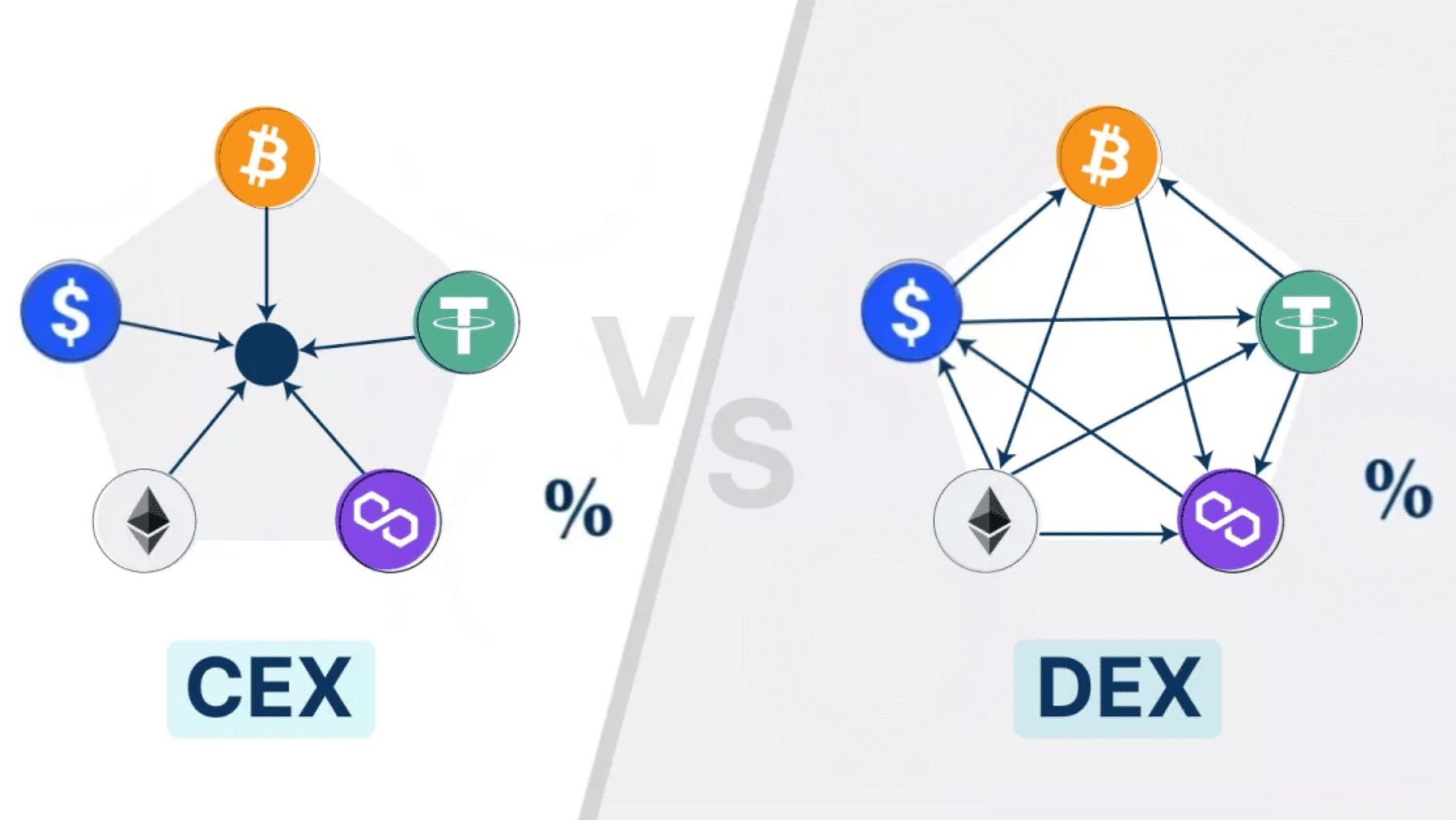
When diving into the world of cryptocurrency trading, you’ll often come across the terms DEX (Decentralized Exchange) and CEX (Centralized Exchange). Both offer ways to swap cryptocurrencies, but have you ever wondered how their fees stack up? Swap fees can eat into your profits if you’re not careful, so understanding the differences is key. In this article, we’ll break down everything you need to know about swap fees on DEXs and CEXs, helping you make smarter choices when trading crypto.
What Are Swap Fees?
Before diving into a comparison between decentralized exchanges (DEXs) and centralized exchanges (CEXs), it’s important to understand what swap fees actually mean in the world of cryptocurrency trading. Simply put, swap fees are the charges you incur whenever you exchange one cryptocurrency for another. Whether you’re trading Bitcoin for Ethereum, swapping stablecoins like USDT for USDC, or exchanging any other digital asset, a fee is typically involved. These fees are an integral part of the trading process and directly impact how much value you get from your transactions.
The existence of swap fees is tied to several factors that keep the entire crypto ecosystem functioning smoothly. One major reason is network costs. Every transaction on a blockchain must be validated and recorded by miners or validators, which requires computational work and energy. This process, often called mining or staking, comes with inherent costs — commonly paid as gas fees in the case of Ethereum or similar blockchains. These gas fees fluctuate depending on network demand and complexity, making them an unavoidable expense for users.
Beyond network costs, the platforms that facilitate these swaps also charge fees for their services. Centralized exchanges operate as intermediaries, offering user-friendly interfaces, order matching, and security measures, all of which come at a cost. These fees help maintain the platform’s infrastructure and ensure smooth operation. On the other hand, decentralized exchanges rely on liquidity providers who pool their assets to enable swaps. The fees collected from users are partially distributed to these providers as an incentive for supplying liquidity, which keeps the markets active and efficient.
Finally, swap fees also play a role in balancing supply and demand within the crypto ecosystem. By imposing a small cost on every trade, these fees discourage frivolous or excessive swapping, which could otherwise overwhelm networks or destabilize markets. They also ensure that those who facilitate trades, whether miners, validators, liquidity providers, or the exchange platforms themselves, receive fair compensation. Understanding these reasons behind swap fees helps clarify why they vary across different types of exchanges and why they should be considered carefully when planning your trades.
Understanding DEX (Decentralized Exchanges)
- DEXs, or decentralized exchanges, function without any central authority or middleman managing the trades.
- Instead of depositing your cryptocurrency into a platform-controlled account, you keep full control of your funds in your own wallet.
- Trades happen directly between users through smart contracts, which are self-executing programs on the blockchain that automate and enforce the terms of the trade.
- This peer-to-peer setup enhances privacy and security since you’re not handing over custody of your assets to a third party.
- DEXs operate on blockchain networks like Ethereum, Binance Smart Chain, or Polygon, making them accessible globally without geographical restrictions.
- Some of the most popular DEX platforms include Uniswap, SushiSwap, and PancakeSwap, each with millions of users and billions of dollars in liquidity.
- Swap fees on DEXs are primarily composed of two components.
- First, there are liquidity provider fees, which are a fixed percentage of each trade, often set at around 0.3%. These fees compensate the individuals or entities who provide the tokens that make swapping possible.
- Second, users must pay blockchain gas fees, which are variable and depend on the current congestion and demand on the network.
- Gas fees cover the computational cost required to execute transactions on the blockchain and can fluctuate wildly, sometimes making smaller trades expensive.
- Liquidity pools underpin DEXs, where users deposit tokens to facilitate trading pairs, and the fees collected are distributed back to these liquidity providers as rewards.
Understanding CEX (Centralized Exchanges)
| Feature | Description | Examples | Fee Types | Additional Notes |
| How CEXs Work | Centralized exchanges act as middlemen where users deposit crypto into the platform’s wallets. | Binance, Coinbase, Kraken | Trading, withdrawal, deposit fees | Users trade within the exchange’s internal order book system. |
| Custody | The exchange holds custody of your funds during trading. | This means users trust the platform to secure their assets. | ||
| Trading Fees | Usually a tiered percentage based on user’s trading volume; fees decrease with higher volume. | Typically 0.1% to 0.5% per trade | Some exchanges offer discounts for using native tokens. | |
| Withdrawal Fees | Fixed or percentage fees charged when moving crypto off the platform. | Varies depending on the coin and amount | Withdrawal fees can sometimes be higher than trading fees. | |
| Deposit Fees | Some exchanges charge fees for deposits, but many offer free deposits, especially for crypto. | Often free, but can vary with payment method | Fiat deposits may involve additional banking fees or delays. |
Breaking Down Swap Fees: DEX vs CEX
When comparing swap fees between decentralized exchanges (DEXs) and centralized exchanges (CEXs), it’s important to understand that the fee structures and the costs involved are quite different. On DEXs like Uniswap, swap fees typically include a liquidity provider fee, which is usually around 0.3% per trade. This fee is paid directly to those who provide liquidity for the trading pairs, incentivizing them to keep the market liquid. In contrast, on CEXs such as Binance, the liquidity provider fee is not separately visible because it is usually bundled into the trading fee charged by the platform.
Centralized exchanges charge a distinct trading fee that often ranges from 0.1% to 0.5% per trade. This fee is part of the business model of the exchange, covering operational costs and profits. DEXs, on the other hand, don’t impose a separate trading fee beyond the liquidity provider fee, since trades occur directly on-chain between users. This difference highlights the way each platform generates revenue and rewards participants, reflecting their contrasting operational models.
Another significant factor affecting swap fees is the blockchain gas fee. On DEXs operating on networks like Ethereum, gas fees can vary significantly depending on network congestion and demand, sometimes making the cost of swapping prohibitively high for smaller trades. CEXs do not charge blockchain fees for trades occurring within their platform because transactions happen off-chain until funds are withdrawn. This gives CEXs a cost advantage in terms of transaction fees, particularly for frequent traders or those making smaller swaps.
Withdrawal and deposit fees further differentiate the two exchange types. DEXs generally do not charge explicit withdrawal or deposit fees since users maintain custody of their funds at all times. In contrast, centralized exchanges typically charge fixed or percentage-based withdrawal fees when you transfer crypto out of the platform. Deposits on CEXs are often free, especially for crypto, but may incur fees when dealing with fiat currency or specific payment methods. These varying fee components make it crucial to evaluate your trading habits and priorities when choosing between a DEX and a CEX.
Why Are DEX Fees Often Higher Than CEX Fees?
- Gas fees on Ethereum-based decentralized exchanges can surge dramatically during periods of high network congestion, causing transaction costs to spike.
- These gas fees are paid directly to miners or validators to process and confirm transactions on the blockchain, making even small trades expensive.
- For example, swapping $50 worth of tokens could end up costing around $20 or more just in gas fees, significantly reducing the trade’s value.
- Liquidity provider fees on DEXs are typically fixed around 0.3% per swap, serving as compensation to those who supply the tokens used in the liquidity pools.
- These fees help incentivize liquidity providers to take on risk by locking their assets into pools, which facilitates smooth trading.
- Unlike centralized exchanges, DEXs operate without intermediaries, meaning there’s no platform overhead or management fees added on top of swap costs.
- However, this absence of a middleman also means users bear the full brunt of blockchain fees themselves, paying gas costs directly rather than having them absorbed or subsidized by a centralized entity.
- The trade-off for this higher fee burden is that users maintain full control over their assets throughout the swap process, enhancing security and privacy.
- In summary, while DEX fees often appear higher than those on CEXs, this is largely due to unavoidable blockchain transaction costs and the unique incentives designed to support decentralized liquidity.
Why CEX Fees Can Be Lower (But Watch Out!)
| Aspect | Explanation | Impact on Fees | Example | Important Notes |
| Centralized Infrastructure | Trades on CEXs happen off-chain within the platform’s system, avoiding blockchain transaction fees. | No gas fees on internal swaps | Swapping BTC for ETH inside Binance without extra fees | Makes frequent trading cheaper compared to DEXs. |
| Tiered Fee Structure | CEXs often implement a tiered fee system where higher trading volumes lead to lower fees. | Large traders pay significantly less | VIP users on Binance can pay as low as 0.02% fees | Encourages heavy trading and loyalty to the platform. |
| Withdrawal Fees | Although swap fees may be low, withdrawing crypto from a CEX usually incurs fixed or percentage fees. | Can add substantial extra cost | Binance charges a fixed fee per coin withdrawal | Frequent withdrawals can quickly increase overall costs. |
| Fee Discounts | Some exchanges offer fee reductions when using their native tokens to pay fees. | Further reduces trading costs | Using BNB on Binance reduces fees by 25% | A good way to save if you’re an active trader. |
| Hidden or Variable Costs | Some fees might not be obvious upfront, like deposit fees for certain payment methods or inactivity fees. | Can surprise users with unexpected charges | Fiat deposits via certain gateways may have extra fees | Always check the fine print to avoid surprises. |
When to Choose a DEX Based on Fees
Choosing to trade on a decentralized exchange (DEX) can make a lot of sense, especially if you’re looking to access tokens that aren’t available on centralized exchanges (CEXs). Many new or less popular tokens often launch exclusively on DEX platforms, giving traders early or unique opportunities that simply don’t exist elsewhere. If your trading strategy involves experimenting with these niche or emerging assets, a DEX is often the only viable option, despite potentially higher fees.
Another important reason to opt for a DEX is the desire for privacy and control. Since DEXs operate without a middleman, you maintain full custody of your crypto funds throughout the swapping process. This means you don’t have to trust a centralized platform with your assets, reducing the risk of hacks, freezes, or withdrawal restrictions. For users who value autonomy and security over the convenience of a centralized interface, paying the associated fees on a DEX can be a worthwhile trade-off.
If you tend to trade large volumes and can time your transactions during periods of low network congestion, DEX fees may become more manageable. Gas fees on networks like Ethereum can fluctuate widely, so executing trades when the network is less busy helps keep these costs down. Large trades also help spread out fixed fees over a bigger transaction size, making fees more cost-effective compared to multiple smaller trades.
Finally, choosing a DEX is ideal for traders who prioritize trustless transactions. The transparency and automation provided by smart contracts mean your trades execute exactly as programmed without relying on any centralized authority. Although this comes with the added expense of gas fees, many traders consider the price worth paying for the assurance that their swaps are free from censorship or intervention. For those committed to the principles of decentralization, these fees are simply part of maintaining a more open and secure financial system.